

 Tennis Bracelet
 Round Stud
 Solitaire Rings
 Halo Rings
 Bezel Rings
 Three Stone Rings
 Five Stone Rings
 Bridal Set Rings
 Solitaire Accent Rings
 Toi Moi Rings
 Curved Rings
 Semi Mount Rings
 Custom Rings
 Color Diamond Rings
 Lab Gemstone Rings
 Men's Rings
 Round
Round
 Pear
Pear
 Oval
Oval
 Princess
 Asscher
 Marquise
 Emerald
 Cushion
 Radiant
 Heart
Heart
 Old Mine Cuts
 Eternity Bands
 Dainty Bands
 Custom Bands
 Men’s Bands
 Studs
Studs
 Hoops
Hoops
 Jackets
 Dangle
 Bridal
 Fashion Bracelet
 Pendant
 Necklace
 Men's Jewelry
 Pink
Pink
 Champagne
 Yellow
 Blue
Blue
 Black
Black
 Green
Green
 Olive
Olive
 Ruby
Ruby
 Sapphire
 Other Gemstone
 Old Cut Jewelry
 Antique Diamond Jewelry
 Kids Collection
 Celebrity Jewelry
 Old Cut
 Antique Cut
 Matching Pair
 Step Cut
 Rose Cut
 Portuguese Cut
 Portrait Cut
 Pie Cut
 Other
Other
 IGI-GIA Certified
 8X Diamond
 Ready Stocks
 OEC Loose Diamonds
 OEC Rings
 OEC Jewelry
 Old Mine Cushion
 Old Mine Moval
 Old Mine Emerald
 Old Mine Asscher
 Old Mine Pear
 Ready In Stock
 Old Mine Cut Rings
 Old Mine Cut Bands
 Old Mine Cut Earrings
 Old Mine Cut Bracelets
 Old Mine Cut Necklace
 Anniversary Gift
 Birthday Gift
 Gift For Her
 Gift For Him
 Under 300$
 Under 500$
 Gift Card
 Check Balance
 REVIEW
 +1 (551) 274-2892
 contact@ourosjewels.com
December Birthstone Quick FAQ's

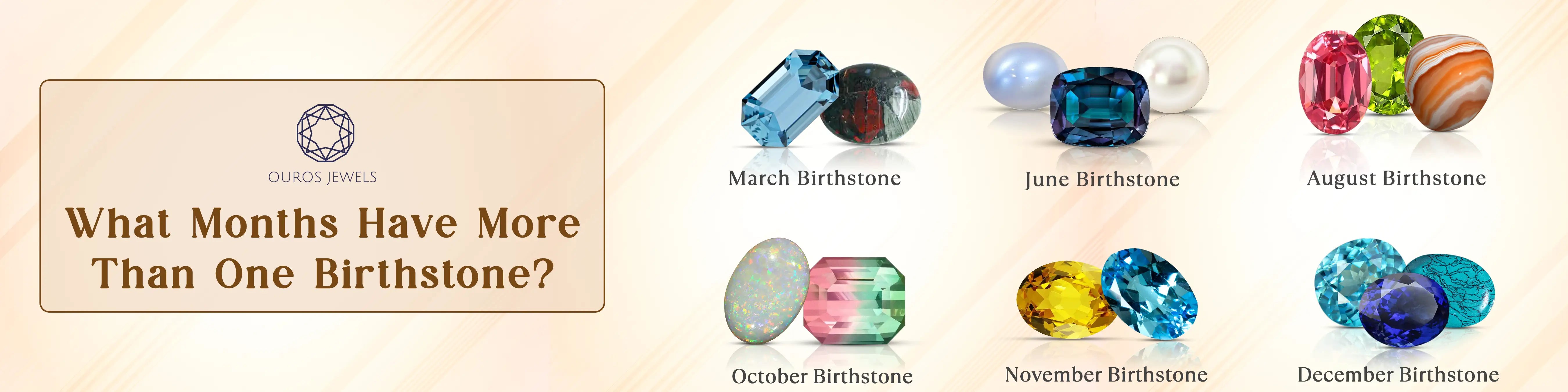
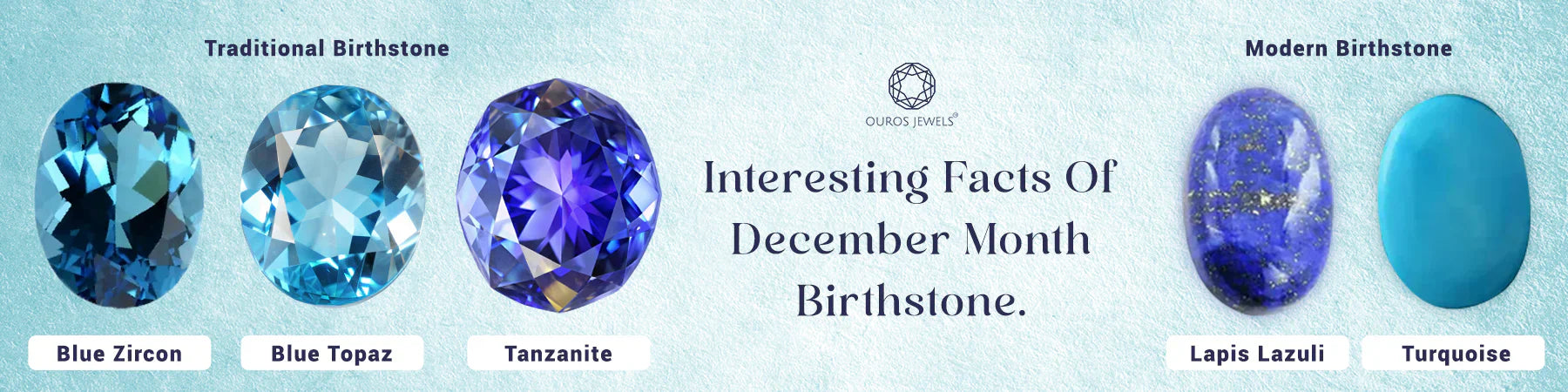
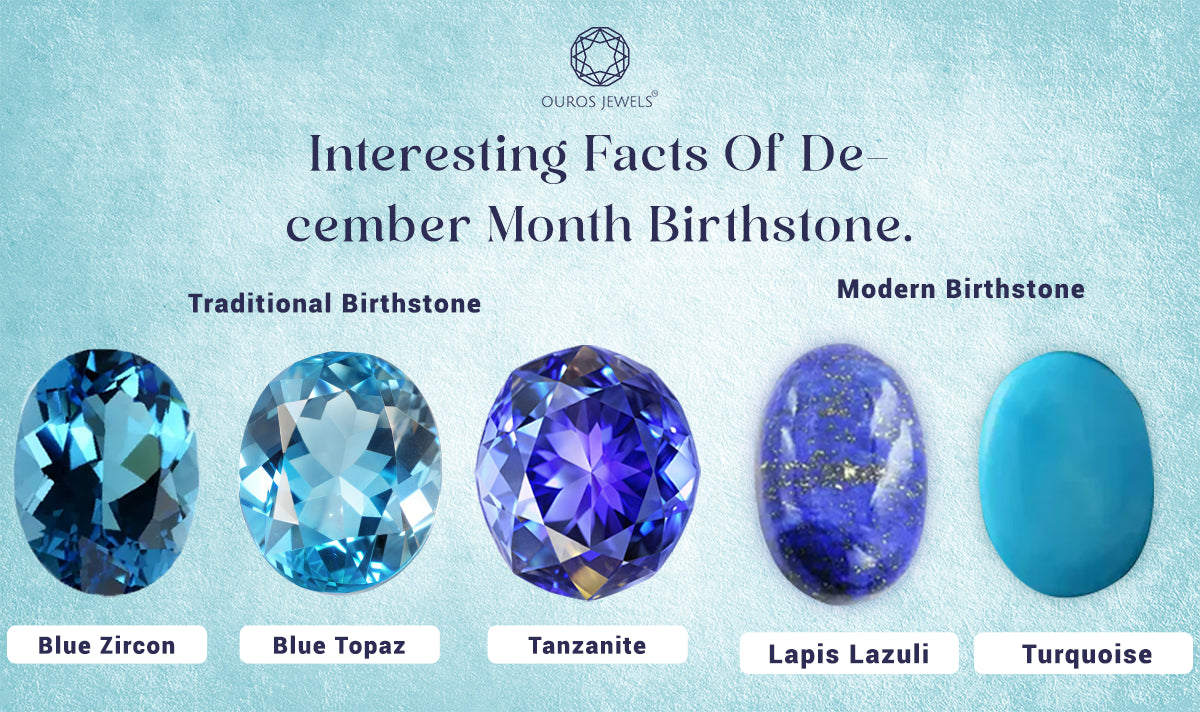
December Birthstone is the stone for a person born in the last month of the calendar year. In December birthstones are five different types of stones, including Tanzanite, Topaz, Zircon, Turquoise, and Lapis Lazuli. Some invisible spiritual and psychological benefits are available in these gemstones, but they help the person and wearer. These gems are selected in different colors options, containing a meaningful life interpretation for engagement and wedding occasions.
These birthstones are found in the mines naturally, and they're not treated to obtain the fancy color like dark blue or Swiss blue that usually appears in the Topaz gemstone. The benefits of the December gems remain unchanged for the wearer, and that's why when a lover wants to commit a promise for a future love relationship, they opt for a gemstone promise ring.
Moreover, promise rings are exchanged as a starting phase of a successful love relationship that, over time, turns into a wedding and lifetime support. These rings were first time given to Roman brides from the groom in the 2nd Century BC. At that time, Tanzanite and Zircon birthstones adorned the finger of the bride with the promise ring.
Aside from these gemstone selections in promise rings, many jewelry styles obtained a unique appearance, and this trend is still running. Engagement rings, wedding bands, antique stud earrings, and vintage necklaces with diamonds are selected in the December gemstones. Also, the tennis bracelets look on the wrist with the touch of these precious birthstones.
Let's find the answer to Birthstone for December so you can decide on these precious gemstones that are sometimes counted as diamond replacement stones.
A. What is December Birthstone?
The December birthstone is Tanzanite, a rare and exquisite gem known for its striking blue-violet hues. Discovered in Tanzania, it is celebrated for its unique color and is believed to have metaphysical properties, bringing balance and harmony. Tanzanite is joined by Zircon, Topaz, Lapis Lazuli, and Turquoise, known for its brilliance, and Turquoise, a revered stone symbolizing good fortune and protection.
These five birthstones offer diverse options for those born in December, each with distinct beauty and significance. Also, these gemstones help people to find positivity and calmness near themselves and work as a factor that removes negativity from the mind and supports it to create a positive vibe around it.
B. Why December Birthstone has more stone?
December is unique, having five birthstones as modern and traditional - Topaz, Zircon, Tanzanite, Lapis Lazuli, and Turquoise. This rarity reflects the diversity of choices, allowing individuals born in December to enjoy a spectrum of colors and meanings. Topaz offers different variations of fancy colors in its counterparts.
Zircon dazzles with various hues, and Tanzanite showcases captivating blue-violet shades. Meanwhile, the Lapis Lazuli and Turquoise's sky blue charm reflects a different personality. The trio offers a rich selection, ensuring December celebrants can find a birthstone that resonates with their personal style and preferences.
C. What is most valuable birthstone for december?
The most valuable birthstone for December is Tanzanite. Its rarity, captivating blue-violet color, and single-source origin in Tanzania contribute to its high value. Tanzanite's unique brilliance, coupled with its metaphysical associations and limited supply, makes it a prized gem. While Zircon and Turquoise also hold significance, Tanzanite stands out as the most coveted and valuable December birthstone, cherished for its exceptional beauty and scarcity in the gemstone market.
D. How rare december birthstone is?
The December birthstone Tanzanite is exceptionally rare. Found exclusively in a small mining area in Tanzania, its geological occurrence is limited. Factors like its unique blue-violet color and single-source origin contribute to its scarcity. This rarity enhances Tanzanite's desirability and value, making it a prized and sought-after gemstone. As a result, fancy color diamonds are opted in the identical hues as the real Tanzanite gemstone color, a dark purplish-blue.
E. How to buy december birthstone easily?
To buy December birthstones easily, research reputable jewelers or online platforms. Verify the gemstone's authenticity with certificates, compare prices, and read customer reviews. Consider budget, preferred gem, and setting. Ensure a return policy and proper documentation. Making an informed purchase ensures a reliable and enjoyable experience when acquiring December birthstones.
F. What is Tanzanite known for?
Tanzanite is renowned for its striking blue-violet hues and exceptional rarity. Discovered in Tanzania, its vivid colors and limited geographic origin contribute to its allure. Beyond its aesthetic appeal, Tanzanite is believed to have spiritual and metaphysical properties, making it a sought-after and cherished gemstone. Thus, this modern birthstone for December is selected worldwide to make jewelry pieces more mesmerizing and finest in appearance.
G. What Turquoise birthstone symbolizes?
Turquoise symbolizes good fortune, protection, and positive energy. Revered for its sky-blue color, it has been historically associated with healing properties, fostering communication, and bringing inner calm. Wearing Turquoise is believed to invite luck and safeguard against negative influences, making it a treasured gemstone. The ancient belief of these gemstones is still revered as a pure connection with heaven and God.
H. What are the color variations of Zircon?
Zircon displays diverse colors, but blue is its most popular hue. Other variations include red, brown, orange, yellow, and green. The most famous color of Zircon gemstone is brown, similar to chocolate diamonds. These fancy colors are known for their brilliance and fire. Zircon's array of colors makes it a versatile and attractive gemstone for various jewelry designs, including a vintage necklace or antique Art Deco tennis bracelet.
I. How does Tanzanite birthstone gets its color?
Tanzanite acquires its unique blue-violet color due to the presence of vanadium during its formation. The interaction of vanadium with specific geological conditions in Tanzania results in the captivating and distinct color spectrum that sets this December birthstone apart as a rare and prized gemstone. Also, the chemical association with the counterparts organically influences the gemstone to get a dark shade.
J. Can these birthstones be worn together?
Certainly, Zircon, Topaz, Tanzanite, Lapis Lazuli, and Turquoise can be worn together. Combining these December birthstones in jewelry creates a harmonious and visually appealing ensemble. Their diverse colors and individual significance can be celebrated collectively, offering a unique and meaningful expression of personal style whether you're proposing to your loved one with an engagement ring or gifted a wedding anniversary necklace jewelry.
K. What historical significance does Turquoise hold?
Turquoise holds rich historical significance, dating back centuries. It has been revered by various cultures for its protective qualities, believed to safeguard against harm and bring good fortune. Historically, it has been used in jewelry, amulets, and artifacts for its symbolic and spiritual importance. Also, these traditional birthstones of December were selected in antique and vintage jewelry designs that look beautiful on the personality.
L. Is Zircon birthstone is durable enough as diamond?
Yes, Zircon is a durable gemstone. With a high refractive index, it exhibits brilliance and fire. While it is susceptible to abrasion, proper care ensures its longevity. Zircon's durability makes it suitable for various jewelry styles, offering both aesthetic appeal and lasting beauty with diamond engagement rings and wedding bands.
M. Are there any alternative birthstones for December?
Yes, alternative birthstones for December include Blue Topaz and Lapis Lazuli. While Tanzanite, Zircon, and Turquoise are primary, these alternatives offer unique beauty and significance. Individuals born in December can choose from a diverse selection of birthstones to suit their preferences.
N. Can birthstones incorporated into custom jewelry designs?
Absolutely, birthstones can be seamlessly incorporated into custom jewelry designs. Skilled jewelers can create unique and personalized pieces that celebrate individuality. Whether using a single birthstone or combining multiple gems, custom designs offer a meaningful and distinctive expression of personal style. For example, a tennis bracelet with fancy color diamonds and lapis lazuli gemstones looks elegant and vintage. For a unique appearance, a necklace at least 18 inch length and turquoise birthstone appeared as classic era jewelry.
O. How to clean a December birthstone and jewelry?
Clean December birthstones like Tanzanite, Zircon, or Turquoise with a soft brush, mild soap, and warm water. Avoid harsh chemicals or ultrasonic cleaners. Gently pat dry with a soft cloth. For jewelry, consult care instructions specific to the metal and gemstone types to ensure proper cleaning.
P. Is Blue Zircon gemstone is similar to blue diamond?
While Blue Zircon and blue diamonds share a blue hue, they differ significantly. Blue diamonds are rare and expensive, valued for their rarity and brilliance. Blue Zircon, while vibrant, is more affordable, making it an attractive alternative for those seeking a stunning blue gemstone.