Solitaire Rings
 Halo Rings
 Bezel Rings
 Three Stone Rings
 Five Stone Rings
 Bridal Set Rings
 Solitaire Accent Rings
 Toi Moi Rings
 Curved Rings
 Semi Mount Rings
 Custom Rings
 Color Diamond Rings
 Lab Gemstone Rings
 Men's Rings
 Round
Round
 Princess
 Asscher
 Cushion
 Radiant
 Emerald
 Heart
Heart
 Pear
Pear
 Oval
Oval
 Marquise
 Old Mine Cuts
 Eternity Bands
 Dainty Bands
 Custom Bands
 Men’s Bands
 Studs
Studs
 Hoops
Hoops
 Jackets
 Dangle
 Bridal
 Tennis Bracelet
 Fashion Bracelet
 Pendant
 Necklace
 Men's Jewelry
 Pink
Pink
 Champagne
 Yellow
 Blue
Blue
 Black
Black
 Green
Green
 Olive
Olive
 Ruby
Ruby
 Sapphire
 Other Gemstone
 Old Cut Jewelry
 Antique Diamond Jewelry
 Kids Collection
 Celebrity Jewelry
 Old Cut
 Rose Cut
 Pie Cut
 Step Cut
 Portuguese Cut
 Portrait Cut
 Antique Cut
 Matching Pair
 Other
Other
 IGI-GIA Certified
 8X Diamond
 Ready Stocks
 OEC Loose Diamonds
 OEC Rings
 OEC Jewelry
 Old Mine Cushion
 Old Mine Moval
 Old Mine Emerald
 Old Mine Asscher
 Old Mine Pear
 Ready In Stock
 Old Mine Cut Rings
 Old Mine Cut Bands
 Old Mine Cut Earrings
 Old Mine Cut Bracelets
 Old Mine Cut Necklace
 Anniversary Gift
 Birthday Gift
 Gift For Her
 Gift For Him
 Under 300$
 Under 500$
 Gift Card
 Check Balance
 REVIEW
 +1 (551) 274-2892
 contact@ourosjewels.com
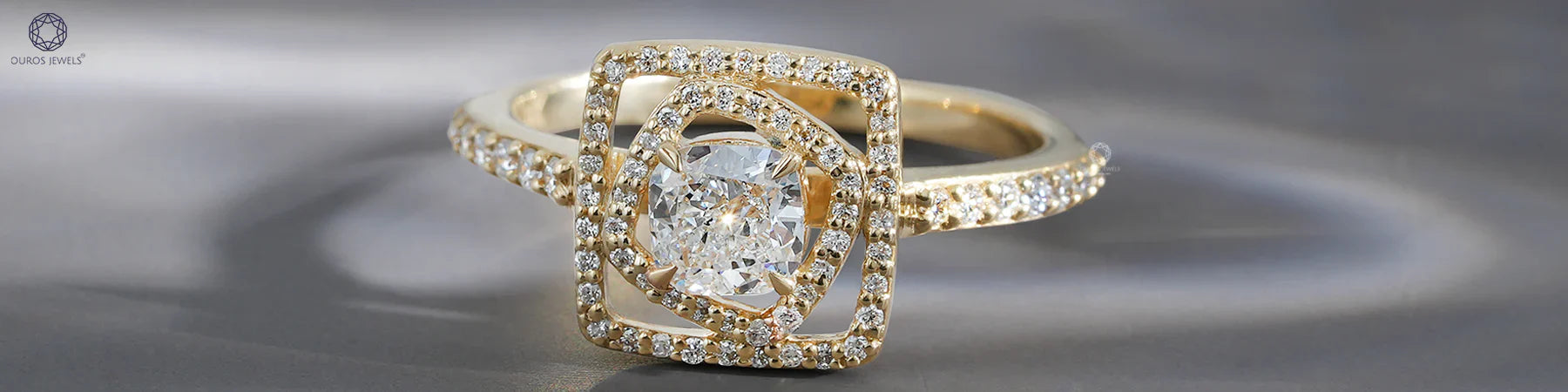
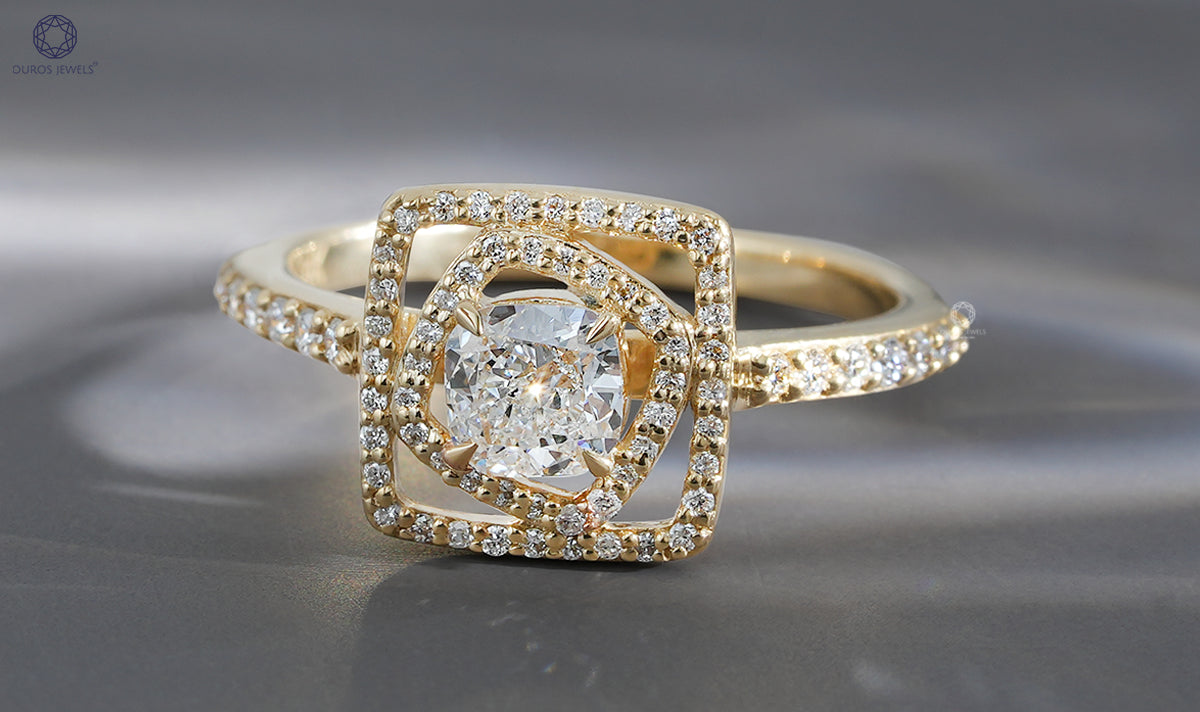
Cushion Cut Engagement Rings: The Expert Guide to Easy Shopping

When couples commit to one another, they often exchange rings as a symbol of their shared feelings and intentions. This tradition has anchored relationships for generations and continues to represent commitment and partnership today.
Engagement rings, particularly diamond engagement rings, are available in a wide range of shapes, including princess and radiant cuts. However, for people who value elegance with a touch of vintage character, the cushion cut diamond is an excellent alternative. With its soft, rounded corners and square or rectangular outline, a cushion cut creates a distinctive look and a beautiful pattern of light.
For couples looking for something different from a traditional round diamond, a cushion cut engagement ring can express a personal, long-term commitment while offering plenty of flexibility in ring design.
Before choosing a cushion cut diamond ring, consider several important factors to ensure you make the right purchase for your partner. This buying guide explains what makes cushion cut diamonds distinctive and how to assess their quality, setting, metal and price.
By the end of this guide, you'll have the knowledge you need to choose a ring that is attractive, practical and representative of your relationship.
First, let's understand what a cushion diamond ring is and what it represents.
Cushion Cut Diamond Ring Meaning
A cushion cut diamond has a soft, pillow-like shape, with a square or rectangular outline and rounded corners. Modern cushion cuts can have different facet arrangements, including brilliant and modified-brilliant styles, which means their light pattern and overall appearance can vary significantly from one diamond to another.
A cushion diamond ring can represent emotional attachment, affection, romance and gratitude between partners. The combination of a structured shape and softer corners gives the diamond a balance between classic elegance and contemporary style.
Cushion cut diamonds are available in a wide range of carat weights and ring designs. For example, a 1-carat diamond can work particularly well in a halo or cluster ring, while a larger 2- or 3-carat cushion can create a stronger presence in a solitaire setting. The right size ultimately depends on your preferred appearance, ring design and budget.
The Reasons to Choose Cushion Diamond Rings
There are four main reasons people choose cushion diamond rings: their broad face-up appearance, distinctive squarish shape, varied faceting styles and potential value compared with some other diamond shapes.
Beautiful light reflections and their combination of vintage and modern characteristics also make cushion cuts a popular choice for engagement rings.
As a couple, you may want your engagement ring to look distinctive while still retaining a timeless appearance. A cushion cut can offer that balance, particularly when the diamond quality, setting and metal are selected according to personal preference and budget.
Let's look at these characteristics in more detail.
Ample Table Width: The Light Reflection Essential
The cushion cut's broad table contributes to its face-up appearance and allows you to see a substantial portion of the diamond when it is viewed from above.
However, table size should not be considered in isolation. Proportions, facet arrangement, pavilion depth and symmetry all influence how a cushion diamond interacts with light. Cushion cuts are also available in different faceting patterns, so two diamonds with similar measurements can produce noticeably different visual effects.
This is one reason it is useful to compare actual diamond images or videos rather than selecting a cushion cut solely from its grading information.
![[Cushion and princess cut diamond table width comparison]-[ouros jewels]](https://cdn.shopify.com/s/files/1/0527/7669/8040/files/Cushion_and_Princess_Diamond_Cut_Comparison_480x480.webp?v=1685687973)
It Is a Square and Pillow-Shaped Stone
The cushion cut is recognised for its pillow-like outline, combining a square or rectangular shape with curved sides and rounded corners.
The proportions of the diamond influence both its face-up size and light performance. A cushion with a more square outline can create a different appearance from an elongated cushion, even when both have the same carat weight.
This versatility allows cushion diamonds to work across many engagement ring styles, including solitaire, halo, three-stone, vintage and contemporary designs.
![[Cushion diamond's appearance in side angles]-[ouros jewels]](https://cdn.shopify.com/s/files/1/0527/7669/8040/files/Cushion_Diamond_Appearance_With_Side_Angles_480x480.webp?v=1693902990)
Fancy Rhombus- and Kite-Shaped Facets
Many cushion brilliant diamonds feature distinctive internal facet patterns, including kite-shaped facets. These facets contribute to the diamond individual light pattern and visual character.
When selecting a square cushion diamond, look beyond the grade on the report and examine the actual stone. Symmetry, facet alignment, proportions and the distribution of light and dark areas can all affect how attractive the diamond appears.
For this reason, it is useful to compare several cushion diamonds before making a final choice.
These characteristics can make a cushion cut particularly effective in engagement rings, including halo, solitaire and three-stone designs.
Potentially Lower Price
Cushion and princess cuts are both square or squarish diamond shapes, but their pricing can differ depending on the diamond's quality, proportions, supply and market conditions.
A cushion cut may offer a lower price per carat than some other popular shapes, although this should never be assumed for every diamond. The 4Cs, certification, cutting style, proportions and retailer all influence the final price.
For example, the original comparison below illustrates how two lab-grown diamonds with similar stated grades can have different prices.
![[Cushion and princess cut diamond 4cs comparison with price]-[ouros jewels]](https://cdn.shopify.com/s/files/1/0527/7669/8040/files/Cushion_and_Princess_Cut_Diamond_600x600.webp?v=1685688870)
|
Type |
Carat |
Colour |
Clarity |
Cut/Quality |
Illustrative Price |
|
Cushion |
1.00 |
EF |
VVS |
Excellent* |
$980 |
|
Princess |
1.00 |
EF |
VVS |
Excellent* |
$1,100 |
*Prices are illustrative rather than a current UK market quotation. For fancy-shaped diamonds such as cushions, compare the actual stone's proportions, faceting, polish, symmetry and visual performance rather than relying on an overall GIA cut grade.
For more details, compare cushion and princess cut diamonds before deciding which shape is most suitable for your engagement ring.
4Cs of Diamond Selection
The 4Cs of diamonds colour, clarity, carat weight and cut are an important framework for understanding diamond quality and value. GIA developed the 4Cs as a universal method for describing diamond quality.
For a cushion cut, however, the 4Cs should be considered alongside the diamond's actual proportions, facet pattern, polish and symmetry. This is particularly important because GIA's standard overall cut grading system applies to standard round brilliant diamonds rather than fancy shapes such as cushions.
Your choice should also reflect the ring design, personal preferences and budget.
Choose 1 to 3 Carats: An Ideal Selection
Carat weight measures how much a diamond weighs. One metric carat equals 0.20 grams.
Do not confuse carat weight with diamond size. Carat tells you the diamond's weight, while measurements such as length, width and depth determine its physical dimensions and face-up appearance.
For a cushion cut engagement ring, 1 to 3 carats provides a useful range to consider, but there is no universal maximum or minimum. A smaller cushion can look substantial in a halo or cluster setting, while a 2- or 3-carat cushion can create a dramatic appearance in a solitaire.
![[Cushion cut diamond chart]-[ouros jewels]](https://cdn.shopify.com/s/files/1/0527/7669/8040/files/Carat_Weight_Chart_For_Cushion_Diamond_480x480.webp?v=1693894598)
A 1.5-carat cushion can work particularly well in a halo or cluster engagement ring. A 2-carat cushion solitaire can create an elegant centrepiece, while a 3-carat square cushion can provide a distinctive statement look.
Ultimately, choose the carat weight that works with your budget, preferred proportions and ring setting.
D to K Colour Grade: A Versatile Choice
Colour is another important consideration when choosing a cushion diamond engagement ring.
For traditional colourless or near-colourless diamonds, many buyers consider the D-to-K range. D is at the top of the standard D-to-Z colour scale, while colour becomes progressively more noticeable as you move towards the lower grades.
A D-colour diamond is rare and generally commands a premium. If you want a visually bright diamond while allocating more of your budget to size or setting, a near-colourless grade can be worth considering.
![[Cushion diamond color grade chart from D to Z+ fancy colors]-[ouros jewels]](https://cdn.shopify.com/s/files/1/0527/7669/8040/files/Color_Chart_For_Cushion_Diamond_480x480.webp?v=1693894789)
The traditional GIA D-to-Z colour scale is commonly grouped as follows:
|
GIA Colour Range |
General Description |
|
D–F |
Colourless |
|
G–J |
Near colourless |
|
K–M |
Faint |
|
N–R |
Very light |
|
S–Z |
Light |
If you prefer something more distinctive, cushion cuts also work particularly well with fancy-colour diamonds, including pink, yellow, blue, champagne and other colours.
Fancy-colour diamonds are assessed using a different grading approach from the D-to-Z colour scale, so they should not simply be treated as “Z+” versions of colourless diamonds.
A pink diamond may appeal to someone looking for a romantic appearance, while blue can create a cooler and more contemporary look. The choice should ultimately reflect your partner's taste and your budget.
Select VVS to VS Diamond Clarity
Diamond clarity describes the presence and characteristics of internal inclusions and external blemishes. Clarity grades are assessed under standard conditions, including examination at 10× magnification.
For cushion diamonds, VVS to VS clarity can be a useful range to consider, particularly when the goal is a clean-looking stone. However, clarity should not be selected by grade alone. The location, size and visibility of inclusions matter, and some lower-clarity diamonds can appear eye-clean.
![[Cushion cut diamond clarity chart to look before buying ring]-[ouros jewels]](https://cdn.shopify.com/s/files/1/0527/7669/8040/files/Cushion_Cut_Diamond_Clarity_Chart_480x480.webp?v=1685965230)
For a solitaire cushion engagement ring, VVS can provide a high-clarity option. VS clarity can also be appropriate for halo, three-stone, cluster and Toi et Moi designs when the individual stone appears clean to the naked eye.
Assess the Diamond Cut and Light Performance
![[Cushion diamond cut chart to see]-[ouros jewels]](https://cdn.shopify.com/s/files/1/0527/7669/8040/files/Cushion_Diamond_Cut_Chart_480x480.webp?v=1685965262)
One important distinction is needed here: GIA's overall Excellent-to-Poor cut grading system is designed for standard round brilliant diamonds, not cushion cuts.
For a cushion diamond, therefore, do not simply search for an “Excellent cut” and assume it is automatically the best option. Instead, assess:
- Proportions
- Length-to-width ratio
- Table and depth
- Facet pattern
- Symmetry
- Polish
- Girdle thickness
- Light performance
- Whether the stone is brilliant or modified brilliant
Modern cushion cuts can have different facet patterns, and modified cushions can produce the characteristic “crushed ice” appearance that some buyers prefer.
The best choice depends on the appearance you personally prefer.
Polish and Symmetry: Grades to Consider
After considering the 4Cs, pay close attention to polish and symmetry.
Polish describes the quality and condition of the diamond's facet surfaces, while symmetry evaluates the accuracy of the diamond's shape and the placement and alignment of its facets. Both are graded separately on a scale ranging from Excellent to Poor.
For a cushion cut, symmetry is particularly useful because the outline should look balanced when viewed face up. The corners and curved sides should appear consistent rather than noticeably uneven.
A practical target for many buyers is Very Good or Excellent polish and symmetry, provided the individual diamond also looks attractive.
The following table preserves the original design-based recommendations as a starting point rather than a strict grading rule:
|
Ring Design |
Suggested Polish |
Suggested Symmetry |
|
Halo |
Very Good |
Excellent |
|
Solitaire |
Excellent |
Very Good |
|
Accent |
Very Good |
Excellent |
|
Vintage |
Excellent |
Very Good |
|
Three-stone |
Very Good |
Very Good |
|
Unique |
Excellent |
Excellent |
GIA recommends using a grading report alongside visual examination because diamonds with similar grading information can still have different proportions and appearances.
Cushion Cut Engagement Rings
Choosing an engagement ring generally comes down to three major considerations: budget, personal expectations and the jeweller you choose.
With those factors established, you can design or select a cushion diamond engagement ring with a personal touch.
Consider the ring style according to your partner's preferences. If you are buying a ring for yourself, focus on your budget, preferred style and accurate ring size.
Metal choice also affects the overall appearance. White gold provides a bright, contemporary look, rose gold creates a warmer and more romantic appearance, and yellow gold offers a classic contrast with the diamond.
Popular cushion cut engagement ring designs include:
- Solitaire engagement ring
- Halo engagement ring
- Unique engagement ring
- Three-stone engagement ring
- Dainty engagement ring
- Toi et Moi engagement ring
- Solitaire accent engagement ring
- Bezel setting
- Art Deco engagement ring
- Vintage engagement ring
- Antique-cut engagement ring
- Pavé setting
The ring style should work with your budget and personal preferences. Some jewellers may also offer finance or monthly payment options, although terms and eligibility should always be checked before purchase.
Solitaire Ring: The Classic Romantic Choice
A cushion diamond solitaire ring is a classic choice. It features one main diamond held by a setting, allowing the cushion shape to remain the central focus.
The solitaire design can emphasise the diamond's outline and works particularly well when the centre stone has attractive proportions and symmetry.
![[Cushion diamond solitaire ring in 14kt rose gold]-[ouros jewels]](https://cdn.shopify.com/s/files/1/0527/7669/8040/files/Pink_Cushion_Cut_Solitaire_Ring_480x480.webp?v=1685697698)
A fancy-colour lab-grown diamond can also be used in a solitaire if you want something more distinctive. Lab-grown diamonds can provide an alternative price point to natural diamonds, while the choice between lab-grown and natural ultimately depends on your preferences, budget and priorities.
A useful starting specification for a cushion solitaire is:
|
Particular |
Suggested Range |
|
Diamond type |
Lab-grown or natural |
|
Colour |
D to K or fancy colour |
|
Clarity |
VVS to VS |
|
Carat weight |
1.00 to 3.00 |
|
Polish/Symmetry |
Very Good to Excellent |
|
Metal |
14K or 18K yellow, rose or white gold |
|
Price |
Varies by diamond and setting |
Shop Cushion Diamond Solitaire Ring
Halo Engagement Ring: A Modern Choice
If your partner wants an engagement ring with additional sparkle around the centre stone, a halo ring is worth considering.
A halo setting places smaller diamonds around the centre stone, creating a larger overall visual presence. Cushion cut halo rings combine the soft shape of the centre diamond with the additional detail of the surrounding stones.
Halo engagement rings are often selected with colourless diamonds, but fancy-colour cushion diamonds can create a more distinctive appearance.
![[Pink cushion diamond halo ring for women]-[ouros jewels]](https://cdn.shopify.com/s/files/1/0527/7669/8040/files/Cushion_Halo_Engagement_Ring_480x480.webp?v=1685698294)
The band and setting pattern play an important role in the final appearance. Options include:
- Delicate French V split shank
- Pavé setting
- Surface prong setting
- Shared prong setting
- Bar setting
A useful starting point for a cushion halo ring is:
|
Particular |
Suggested Range |
|
Diamond type |
Lab-grown or natural |
|
Centre colour |
Pink, yellow, blue or other preferred colour |
|
Clarity |
VVS to VS |
|
Carat weight |
1.30 to 2.70 |
|
Polish/Symmetry |
Very Good to Excellent |
|
Metal |
14K or 18K yellow, rose or white gold |
|
Price |
Varies by diamond and setting |
Unique Ring: A Distinctive Piece of Love
A unique engagement ring moves beyond traditional solitaire and three-stone designs. It can incorporate personal details, unusual bands, clusters or distinctive setting patterns.
With a cushion diamond unique ring, you can select a twisted band or cluster pattern to create additional visual interest. Other possibilities include Art Deco, vintage, nature-inspired, bohemian, minimalist, Art Nouveau, estate, futuristic, cocktail, stackable, infinity and sculptural designs.
![[Cushion diamond ring in unique cluster style with 18kt white gold]-[ouros jewels]](https://cdn.shopify.com/s/files/1/0527/7669/8040/files/Unique_Ring_In_Cushion_Diamond_480x480.webp?v=1693915056)
Metal selection is also important. You can choose 14K or 18K gold in yellow or white tones, while rose gold offers a warmer appearance.
When buying a precious-metal ring, check the hallmark and metal purity to confirm what you are purchasing.
A useful starting specification is:
|
Particular |
Suggested Range |
|
Diamond type |
Lab-grown or natural |
|
Colour |
Yellow, blue, champagne or other preferred colour |
|
Clarity |
VVS to VS |
|
Carat weight |
1.50 to 2.80 |
|
Polish/Symmetry |
Very Good to Excellent |
|
Metal |
14K or 18K yellow, rose or white gold |
|
Price |
Varies by diamond and setting |
Three-Stone Engagement Ring: A Symbolic Design
The three-stone engagement ring is traditionally associated with the past, present and future of a relationship. The original article also describes the design through the “RAF” concept: romance, affection and faith.
A cushion diamond three-stone ring can combine the central cushion diamond with complementary accent stones. Pink, yellow or other fancy-colour diamonds can create a distinctive appearance, while champagne and brown tones offer a warmer aesthetic.
![[White gold three-stone cushion ring]-[ouros jewels]](https://cdn.shopify.com/s/files/1/0527/7669/8040/files/Three-stone_Cushion_Cut_Ring_480x480.webp?v=1685699866)
Accent diamonds can include shapes such as baguette, bullet, shield and elongated step or brilliant cuts. If you are selecting a lab-grown diamond engagement ring, ask for appropriate certification and verify the report with the issuing laboratory.
A useful starting specification is:
|
Particular |
Suggested Range |
|
Diamond type |
Lab-grown or natural |
|
Colour |
Pink, champagne, yellow or preferred colour |
|
Clarity |
VVS to VS |
|
Carat weight |
1.10 to 2.90 |
|
Polish/Symmetry |
Very Good to Excellent |
|
Metal |
14K or 18K yellow, rose or white gold |
|
Price |
Varies by diamond and setting |
Best Metal for Cushion Cut Diamond Rings
Cushion cut diamonds work well with a range of precious metals, including yellow gold, rose gold, white gold and platinum.
The right choice depends on the appearance you want:
- White gold: A bright, contemporary appearance that pairs naturally with colourless diamonds.
- Rose gold: A warmer, romantic appearance that can create an attractive contrast with the diamond.
- Yellow gold: A classic look that provides noticeable contrast against a colourless or near-colourless diamond.
- Platinum: A premium precious-metal option with a naturally white appearance and high durability.
Gold is commonly available in 10K, 14K and 18K purity, while platinum jewellery is commonly marked 950.
|
Metal Type |
Tone |
Common Purity |
Suitable For |
|
Gold |
Yellow, rose and white |
10K, 14K, 18K |
Engagement and wedding rings |
|
Silver |
Argentium and sterling |
925 and 935 |
Proposal and promise rings |
|
Platinum |
White |
950 |
Engagement and wedding rings |
Rather than choosing a metal simply because it is described as “best”, consider your partner's preferred colour, lifestyle, durability requirements and overall ring design.
How Much Should You Spend on a Cushion Cut Engagement Ring?
The original guide suggests a $1,500 to $6,000 budget for a cushion cut engagement ring, depending on the diamond, setting, metal, 4Cs and jeweller.
However, there is no universal amount that you should spend on an engagement ring. The right budget depends on your finances and the specifications you want.
Prices can vary substantially between natural and lab-grown diamonds and between different ring designs. Even two diamonds with the same carat weight and colour and clarity grades can have different prices because their proportions, faceting, certification and other characteristics differ.
If you are considering a customised cushion engagement ring, speak to a jeweller before committing to a budget so you understand the effect of the design choices.
If purchasing online, also check:
- Diamond grading report or certificate
- Return and exchange policy
- Metal purity and hallmarking
- Ring size options
- Warranty and aftercare
- Shipping and insurance
- Resizing policy
- Payment or finance terms
Contact us for a consultation about selecting your cushion diamond ring. If you need a quicker response, use the available chat option to discuss product quality and service questions.
Monthly payment options may also be available for selected ring designs. Always review the payment terms, total cost and eligibility before choosing a finance option.
Conclusion
Buying a cushion cut engagement ring can be a rewarding experience when you understand what to look for.
When choosing a cushion engagement ring, consider the 4Cs, proportions, symmetry, polish, facet pattern, setting and metal. At the same time, personal preference remains important because cushion diamonds can have noticeably different appearances even when their grading information looks similar.
This guide focuses particularly on lab-grown cushion diamond rings, but many of the diamond-selection principles also apply when buying natural diamonds. Lab-grown and natural diamonds have the same crystal structure and comparable chemical and physical properties, although their origins and market characteristics differ.
The original guide places cushion cut engagement rings in a $1,500 to $6,000 price range across different styles, including solitaire, halo, cluster and unique designs. Treat this as a general guide rather than a fixed market price because the cost depends on the diamond, setting, metal, certification and retailer.
Finally, choose the metal carefully. Yellow gold, rose gold and white gold provide different appearances, while platinum offers another premium option.
Most importantly, compare the actual diamond rather than choosing solely by a grading number. Look at its proportions, symmetry, facet pattern and light performance, and make sure the ring fits your partner's style and your budget.
FAQs About Cushion Cut Engagement Rings
1. What is a cushion cut engagement ring?
A cushion cut engagement ring features a diamond with a square or rectangular outline, soft curved sides and rounded corners. Its pillow-like shape gives it a distinctive combination of classic and contemporary character.
2. Do cushion cut diamonds shine more?
Cushion cut diamonds have a different sparkle pattern from round brilliant diamonds. Their appearance depends on the specific facet arrangement, proportions and cutting style. Some cushion cuts produce broad flashes of light, while modified cushion cuts can create a more crushed-ice appearance.
3. Why choose a cushion cut diamond for an engagement ring?
Cushion cuts combine a soft, rounded outline with a structured square or rectangular shape. Their vintage associations, varied faceting and versatility in settings make them suitable for couples looking for an alternative to more traditional diamond shapes.
4. What are the best settings for cushion cut engagement rings?
Popular settings include solitaire, halo, three-stone, bezel, pavé, vintage and Toi et Moi designs. The best setting depends on your preferred appearance, lifestyle and budget.
5. Are cushion cut diamonds more expensive?
Cushion cuts can offer attractive value compared with some other diamond shapes, but there is no fixed percentage by which they are always cheaper. Price depends on factors including carat weight, colour, clarity, proportions, cutting style, certification, whether the diamond is lab-grown or natural, and the retailer.
6. How do the 4Cs apply to cushion cut diamonds?
The 4Cs — cut, colour, clarity and carat weight — provide an important framework for comparing diamonds. With cushion cuts, also pay close attention to proportions, facet pattern, polish, symmetry and actual visual appearance because an overall GIA cut grade is not issued for cushion-shaped diamonds in the same way it is for standard round brilliants.
7. Can cushion cut diamonds appear larger than other cuts?
A diamond's apparent size depends on its measurements, proportions and setting, not just carat weight. Some cushion cuts can have a substantial face-up appearance, while others may appear smaller because of their depth. Compare the length and width measurements as well as carat weight when shopping.
8. Which metals are best for cushion cut rings?
Cushion cut diamonds can work well with platinum, white gold, yellow gold and rose gold. White metals create a contemporary appearance, yellow gold provides classic contrast and rose gold creates a warmer look.
9. Are cushion cut diamonds good for engagement rings?
Yes, cushion cuts are versatile enough for many engagement ring designs, including solitaire, halo, three-stone and vintage settings. Their rounded corners and varied facet patterns allow buyers to choose between different visual styles.
10. How much should I spend on a cushion cut engagement ring?
The original guide uses a $1,500 to $6,000 range, but there is no universal engagement-ring budget. Your actual price will depend on the diamond type, carat weight, colour, clarity, proportions, setting, metal and certification. Set a budget that is comfortable for you and then compare diamonds within that range.