
 Solitaire Rings
 Halo Rings
 Bezel Rings
 Three Stone Rings
 Five Stone Rings
 Bridal Set Rings
 Solitaire Accent Rings
 Toi Moi Rings
 Curved Rings
 Semi Mount Rings
 Custom Rings
 Color Diamond Rings
 Lab Gemstone Rings
 Men's Rings
 Round
Round
 Pear
Pear
 Oval
Oval
 Princess
 Asscher
 Marquise
 Emerald
 Cushion
 Radiant
 Heart
Heart
 Old Cuts
 Tennis Bracelet
 Fashion Bracelet
 Pendant
 Necklace
 Men's Jewelry
 Eternity Bands
 Dainty Bands
 Custom Bands
 Men’s Bands
 Studs
Studs
 Hoops
Hoops
 Jackets
 Dangle
 Bridal
 Pink
Pink
 Champagne
 Yellow
 Blue
Blue
 Black
Black
 Green
Green
 Olive
Olive
 Emerald
 Ruby
Ruby
 Sapphire
 Other Gemstone
 Old Cut Jewelry
 Antique Diamond Jewelry
 Kids Collection
 Celebrity Jewelry
 Round
Round
 Princess
 Asscher
 Cushion
 Radiant
 Emerald
 Heart
Heart
 Pear
Pear
 Oval
Oval
 Marquise
 Matching Pair
 Old Cut
 Antique Cut
 Rose Cut
 Step Cut
 Portuguese Cut
 Portrait Cut
 Champagne
 Pink
Pink
 Yellow
 Blue
Blue
 Other
Other
 Emerald
 Ruby
Ruby
 Sapphire
 IGI-GIA Certified
 8X Diamond
 Ready Stocks
 Ready In Stock
 OEC Round
 Old Mine Cushion
 Old Mine Asscher
 Old Mine Emerald
 Old Mine Moval
 Old Mine Pear
 Bands
Bands
 Earrings
 Bracelets
 Necklace
 Anniversary Gift
 Birthday Gift
 Gift For Her
 Gift For Him
 Under 300$
 Under 500$
 Gift Card
 Check Balance
 REVIEW
 +1 (551) 274-2892
 contact@ourosjewels.com
Diamond Anatomy: Definition, Parts and Complete Guide
Summarize this post with AI

Understanding diamond anatomy is essential when choosing a lab diamond. Every part of a diamond plays a role in its brilliance, durability and overall appearance. The proportions and craftsmanship of each section determine how effectively the stone reflects light and how attractive it looks once set in jewellery.
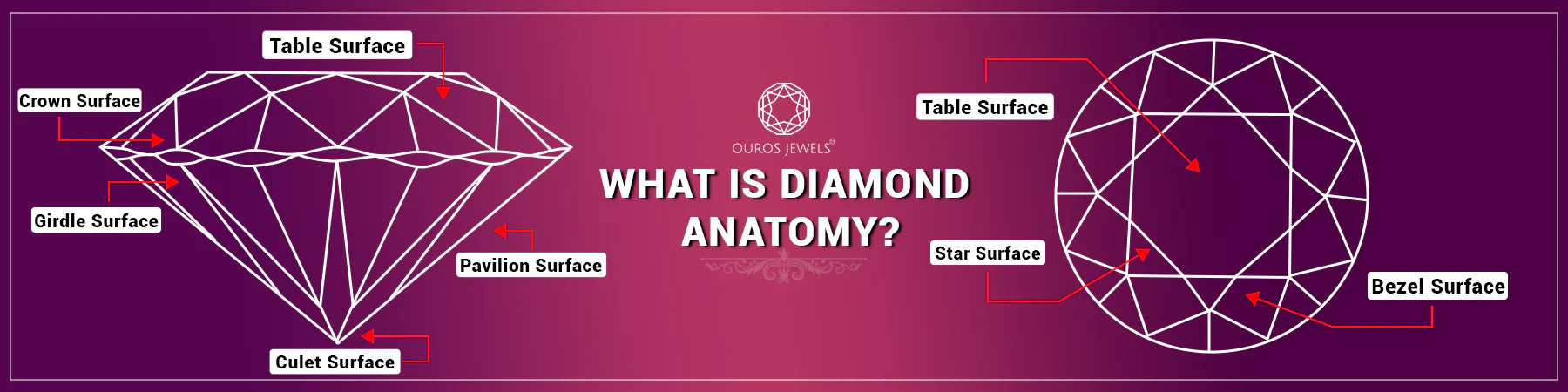
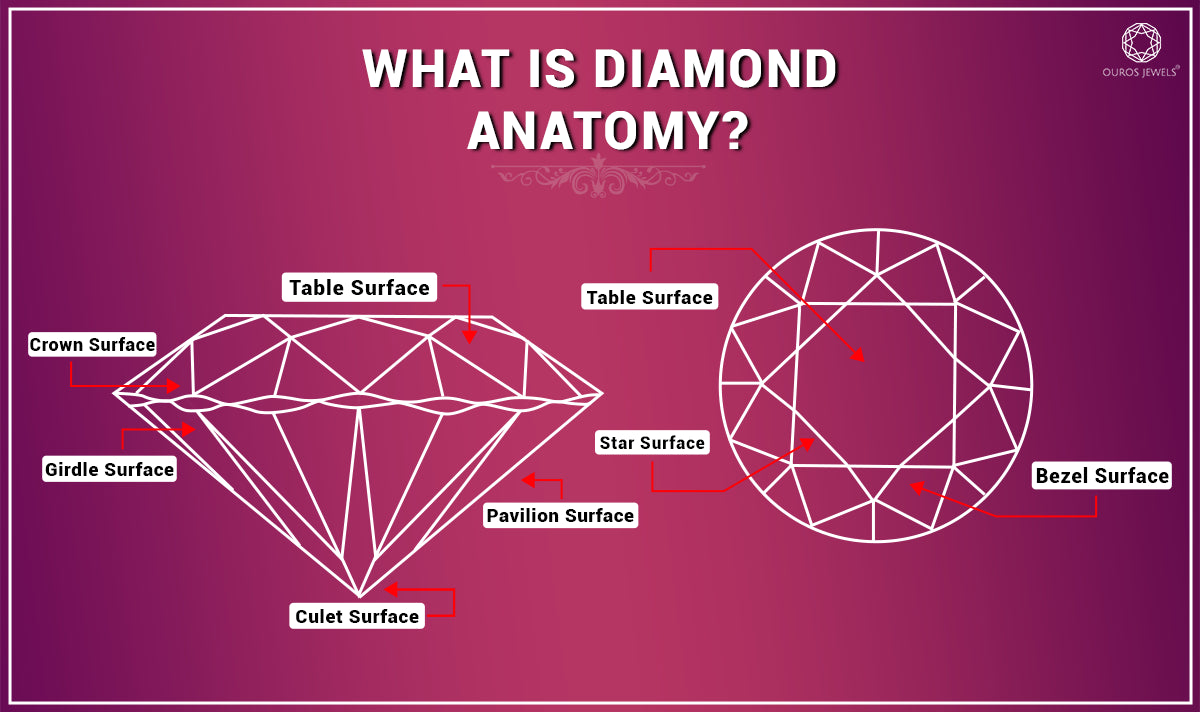
Diamond anatomy refers to the structural parts created during the cutting and polishing process. These include the table, crown, girdle, pavilion and culet. Together, these components influence a diamond cut quality, sparkle and value.
Whether you're buying a natural or lab grown diamond, the anatomy remains identical. Learning these parts will help you understand diamond grading reports and make a more informed purchase.
What is Diamond Anatomy?
Diamond anatomy describes the five main structural components of a polished diamond:
- Table – the large, flat facet on the top of the lab diamond.
- Crown – the upper portion between the table and girdle.
- Girdle – the narrow outer edge separating the crown and pavilion.
- Pavilion – the lower section beneath the girdle.
- Culet – the tiny facet or point at the bottom of the pavilion.
These parts work together to determine how efficiently light enters, reflects inside and returns through the top of the diamond. Proper proportions improve brilliance, fire and scintillation, while poor proportions can reduce sparkle.
Both natural diamonds and lab grown diamonds share the same anatomy because they are cut using the same principles.
![[Diamond table surface appearance]-[ouros jewels]](https://cdn.shopify.com/s/files/1/0527/7669/8040/files/Diamond_Anatomy_Project_Post_2022_Pear_Diamond_copy_3_480x480.jpg?v=1655467144)
The Five Parts of Diamond Anatomy
A polished lab grown diamond consists of five key sections arranged from top to bottom:
- Table
- Crown
- Girdle
- Pavilion
- Culet
Each section has a specific purpose in the diamond's optical performance.
What is the Diamond Table?
The table is the large, flat facet located at the centre of the diamond's top surface. It is the primary point where light enters the stone and one of the most important features affecting a diamond's brilliance.
A well-proportioned table:
- Allows maximum light entry.
- Contributes to brightness and sparkle.
- Makes inclusions easier to see during grading.
- Reflects the overall quality of the cutting process.
When viewing a lab created diamond from above, the table should appear symmetrical, with surrounding facets meeting precisely. Poorly aligned facets may indicate lower-quality cutting and polishing.
Traditional brilliant cut diamonds are designed with carefully calculated table proportions to maximise light performance, although antique and fancy-cut diamonds may have different table sizes depending on their style.
The Diamond Crown
The crown is the upper portion of the diamond located between the table and the girdle. It contains the bezel, star and upper girdle facets, which help refract and disperse light into colourful flashes known as fire.
The crown:
- Directs light into the pavilion.
- Influences brilliance and fire.
- Affects the diamond's visual appearance.
- Helps secure the diamond in many claw (prong) settings.
The angle and height of the crown are carefully calculated during cutting. If these proportions are incorrect, light may escape instead of reflecting back through the table.
The crown works together with the pavilion to create the brilliance that makes a well-cut diamond appear bright and lively.
The Diamond Girdle
The girdle is the narrow edge that separates the crown from the pavilion. It forms the widest part of the lab diamond and provides structural support during setting.
The girdle serves several important purposes:
- Connects the crown and pavilion.
- Protects the diamond during setting.
- Influences weight distribution.
- Contributes to overall cut quality.
A girdle may be:
- Extremely Thin
- Very Thin
- Thin
- Medium
- Slightly Thick
- Thick
- Very Thick
- Extremely Thick
An overly thin girdle can make a diamond more susceptible to chipping, while an excessively thick girdle can add unnecessary weight without improving appearance.
How the Girdle is Created
During the cutting process, the diamond cut shapes the girdle using specialised polishing equipment. Precision is essential because even minor errors can affect the stone's symmetry, proportions and overall cut grade.
The girdle also serves as the reference point for many diamond measurements recorded on grading reports.
Girdle and Diamond Cut Grades
The girdle contributes to the overall cut quality.
- Excellent Cut – Well-balanced girdle with optimal proportions.
- Very Good Cut – Slightly thicker or thinner than ideal but still performs well.
- Good Cut – Acceptable proportions with moderate light performance.
- Fair Cut – Less efficient light return due to proportion issues.
- Poor Cut – Excessively thick or thin girdle that negatively affects appearance and durability.
![[Girdle anatomy and its faceting placements]-[ouros jewels]](https://cdn.shopify.com/s/files/1/0527/7669/8040/files/Diamond_Anatomy_Project_Post_2022_Pear_Diamond_480x480.jpg?v=1655467416)
The Diamond Pavilion
The pavilion is the lower section of the diamond beneath the girdle. It is responsible for reflecting light back through the crown and table, making it one of the most important factors affecting brilliance.
The pavilion:
- Contains the lower facets.
- Reflects incoming light.
- Determines light return.
- Influences brightness and sparkle.
If the pavilion is too shallow or too deep, light escapes through the sides or bottom rather than returning to the viewer's eye. This can make the diamond appear dull or dark.
When assessing a diamond, carefully examine the symmetry of the pavilion facets, as uneven proportions may indicate lower cutting quality.
![[Diamond pavilion anatomy appearance]-[ouros jewels]](https://cdn.shopify.com/s/files/1/0527/7669/8040/files/Diamond_Anatomy_Project_Post_2022_Pear_Diamond_copy_4_480x480.jpg?v=1655467514)
The Diamond Culet
The culet is the tiny facet or point located at the very bottom of the pavilion. Many modern brilliant-cut diamonds have either a very small culet or no visible culet at all.
The culet helps:
- Protect the pavilion tip from chipping.
- Complete the diamond's facet arrangement.
- Influence light leakage when excessively large.
A properly proportioned culet has little impact on appearance. However, a large culet can become visible through the table and allow light to escape, reducing brilliance.
Some diamond shapes, particularly antique cuts, feature more noticeable culets as part of their traditional design.
How Diamond Anatomy Affects Sparkle
Every part of a diamond works together to create its appearance.
- The table allows light to enter.
- The crown bends and disperses light.
- The pavilion reflects light internally.
- The culet completes the facet structure.
- The girdle supports the overall proportions.
When these elements are cut to ideal proportions, the diamond produces exceptional brilliance, fire and scintillation.
Conclusion
Understanding diamond anatomy makes it easier to evaluate a diamond's quality before making a purchase. The table, crown, girdle, pavilion and culet all influence how the diamond reflects light, how durable it is and how attractive it appears.
Whether you're selecting a natural or lab grown diamond, paying attention to these structural features will help you choose a beautifully cut stone with excellent light performance.
Frequently Asked Questions
What is diamond anatomy?
Diamond anatomy refers to the five structural parts of a polished diamond: the table, crown, girdle, pavilion and culet. Together, they determine how the diamond reflects light and how brilliant it appears.
What are the main parts of a diamond?
The five main parts are:
- Table
- Crown
- Girdle
- Pavilion
- Culet
Each contributes to the diamond's overall appearance and performance.
Why is the table important?
The table is the largest facet and the main entry point for light. Its size and proportions greatly influence a diamond's brightness and brilliance.
How does the crown affect sparkle?
The crown refracts light entering through the table and works with the pavilion to create brilliance and colourful flashes of light known as fire.
Why is the girdle important?
The girdle provides structural support, influences cut quality and protects the diamond during setting. An extremely thin girdle may chip more easily, while an excessively thick girdle can reduce visual performance.
What does the pavilion do?
The pavilion reflects light back through the crown and table. Proper pavilion depth is essential for maximum brilliance and sparkle.
Does the culet affect a diamond brilliance?
Yes. A very large culet can allow light to escape through the bottom of the diamond, reducing brilliance. Most modern diamonds have a very small or no visible culet to maximise light return.
Is the anatomy of lab grown and natural diamonds the same?
Yes. lab grown and natural diamonds have the same physical anatomy. Both are cut using the same principles and consist of the same five structural parts.


