
 Solitaire Rings
 Halo Rings
 Bezel Rings
 Three Stone Rings
 Five Stone Rings
 Bridal Set Rings
 Solitaire Accent Rings
 Toi Moi Rings
 Curved Rings
 Semi Mount Rings
 Custom Rings
 Color Diamond Rings
 Lab Gemstone Rings
 Men's Rings
 Round
 Pear
 Oval
 Princess
 Asscher
 Marquise
 Emerald
 Cushion
 Radiant
 Heart
 Old Cuts
 OEC
 OMC
 OMM
 Tennis Bracelet
 Fashion Bracelet
 Pendant
 Necklace
 Men's Jewelry
 Eternity Bands
 Dainty Bands
 Custom Bands
 Men’s Bands
 Studs
 Hoops
 Jackets
 Dangle
 Bridal
 Pink
 Champagne
 Yellow
 Blue
 Black
 Green
 Olive
 Emerald
 Ruby
 Sapphire
 Other Gemstone
 Old Cut Jewelry
 Antique Diamond Jewelry
 Kids Collection
 Celebrity Jewelry
 Round
 Princess
 Asscher
 Cushion
 Radiant
 Emerald
 Heart
 Pear
 Oval
 Marquise
 Matching Pair
 Old Cut
 Antique Cut
 Rose Cut
 Step Cut
 Portuguese Cut
 Portrait Cut
 Champagne
 Pink
 Yellow
 Blue
 Other
 Emerald
 Ruby
 Sapphire
 IGI-GIA Certified
 8X Diamond
 Ready Stocks
 Ready In Stock
 OEC Round
 Old Mine Cushion
 Old Mine Asscher
 Old Mine Emerald
 Old Mine Moval
 Old Mine Pear
 Bands
 Earrings
 Bracelets
 Necklace
 OEC Jewelry
 Anniversary Gift
 Birthday Gift
 Gift For Her
 Gift For Him
 Under 300$
 Under 500$
 Gift Card
 Check Balance
 REVIEW
 +1 (551) 274-2892
 contact@ourosjewels.com
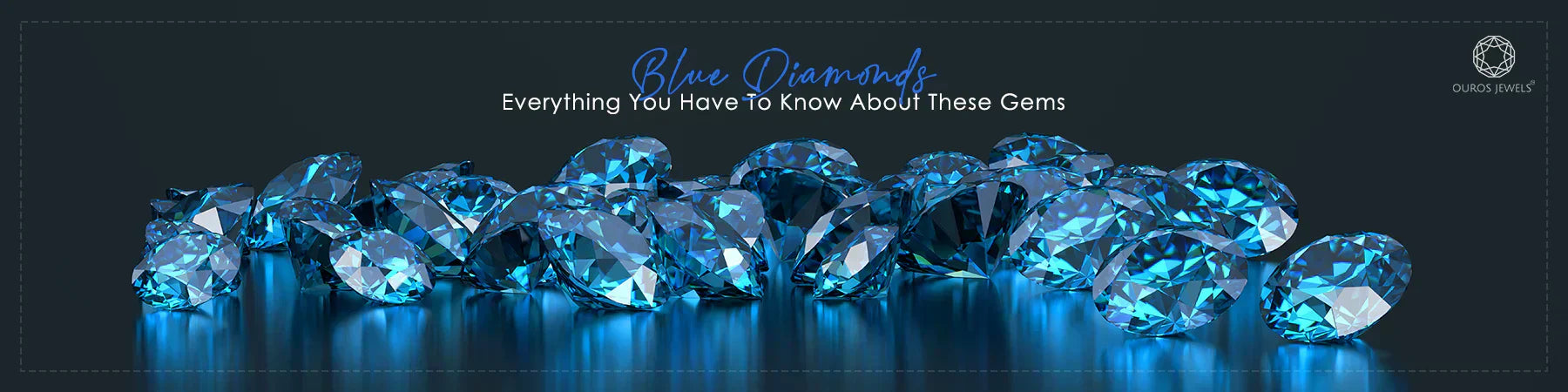
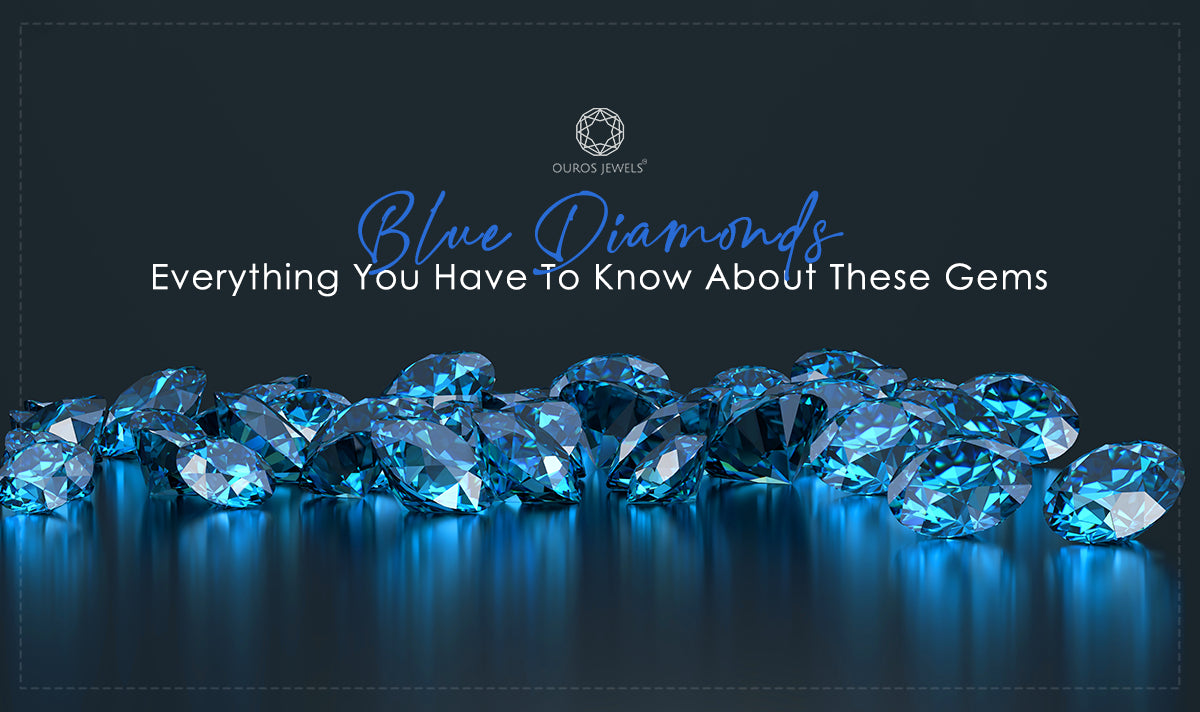
Blue Diamonds: Everything You Need to Know
Summarize this post with AI

Blue diamonds are among the rarest fancy coloured diamonds, admired for their distinctive ocean blue hues and elegant appearance. Their colour, rarity and symbolism make them a popular choice for engagement rings, wedding bands, anniversary gifts and fine jewellery.
The colour of a diamond is one of the key factors influencing its appearance and value, alongside the other 3Cs: cut, clarity and carat weight. Blue diamonds are available in shades ranging from pale sky blue to deep navy, with different colour intensities creating different visual effects.
Natural blue diamonds get their colour primarily from the presence of boron within the diamond crystal structure. However, blue diamonds are also available as treated natural diamonds and lab grown diamonds, giving buyers more options to consider.
This guide explains how blue diamonds form, what makes them rare, their colour grades, prices, differences between natural and lab grown stones, jewellery styles and care requirements.
Chapter I: What Is a Blue Diamond?

A blue diamond is a fancy coloured diamond with a blue hue. In natural blue diamonds, this colour is primarily associated with boron present within the crystal structure. Natural blue diamonds are exceptionally rare compared with many other diamond colours.
Blue diamonds can display a range of shades, from pale sky blue to deep navy. The right shade depends on personal preference and the intended jewellery design. For example, a pale blue round cut diamond may suit a delicate tennis bracelet, while a deeper blue stone can create a striking appearance in a statement necklace.
Natural blue diamonds are difficult to source, while blue lab grown diamonds offer a more accessible alternative for buyers who want a similar appearance without the high cost associated with many natural stones.
The price of a blue diamond depends on several factors, including whether it is natural or lab grown, its colour intensity, clarity, cut and carat weight. Natural fancy blue diamonds can command exceptionally high prices, particularly when their colour is intense and their quality is outstanding.
Chapter II: How Are Blue Diamonds Formed in the Earth's Crust?

Natural blue diamonds form under extreme pressure and temperature deep within the Earth. Their blue colour is primarily caused by boron incorporated into the diamond's crystal structure.
One scientific explanation for the presence of boron involves the movement of oceanic tectonic plates. As oceanic crust moves beneath another plate, minerals and materials can be carried deep into the Earth mantle. Research into super deep diamonds has provided evidence that some diamonds originate from geological environments associated with these processes.
Blue diamonds have attracted considerable scientific interest because some natural examples formed at extraordinary depths, potentially hundreds of kilometres beneath the Earth's surface.
The mining and recovery of natural diamonds can be difficult and expensive. Once recovered, rough diamonds are assessed, cut and polished to reveal their colour, clarity and brilliance.
Natural blue diamonds should be distinguished from diamonds whose colour has been altered through artificial treatments. Natural colour formation and laboratory colour enhancement are different processes, even if the resulting stones have a similar appearance.
Chapter III: The Meaning and Symbolism of Blue Diamonds

Blue diamonds are often associated with qualities such as trust, loyalty, calmness, wisdom, royalty and commitment. These associations come from the symbolism of the colour blue and individual cultural interpretations rather than scientifically established effects.
Because blue is commonly linked with trust and stability, couples may choose blue diamonds for promise rings, engagement rings and anniversary jewellery.
Blue diamonds also feature in high profile jewellery and collections associated with royalty and luxury. Their distinctive colour and rarity have made them particularly recognisable among fancy coloured diamonds.

Celebrities have worn or received blue diamond jewellery, further contributing to public interest in these stones. However, the details and values of individual celebrity pieces should be verified against reliable sources before being quoted.
The meaning of a blue diamond ultimately depends on the wearer. Some people associate a pale blue diamond with affection and tranquillity, while others see it as a symbol of personal achievement, family heritage or a meaningful milestone.
Blue diamond jewellery can be given for engagements, anniversaries, birthdays, graduations or other important occasions. The design and shade can be chosen to reflect the recipient style and the meaning behind the gift.
Chapter IV: What Types of Blue Diamonds Exist?

Blue diamonds can be distinguished by their origin, colour characteristics and any treatments used to create or enhance their appearance.
Natural blue diamonds
These form naturally within the Earth. Their blue colour is primarily associated with boron in the crystal structure. They are rare and can command high prices, particularly when they have a strong, attractive colour.
Treated natural blue diamonds
These begin as natural diamonds but undergo processes designed to change or enhance their colour. Treatments can include irradiation and high pressure, high temperature processing. Buyers should be told clearly when a diamond's colour has been treated.
Blue lab grown diamonds
These are grown in controlled laboratory environments using methods such as high pressure, high temperature (HPHT) or chemical vapour deposition (CVD). Their colour may result from growth conditions, impurities or subsequent treatments, depending on the particular stone.
Blue diamonds may also display secondary hues, including purplish blue, greenish blue and greyish blue.
When purchasing a blue diamond, check its grading report and product description to understand whether it is natural, lab-grown or treated, and how its colour was produced.
Chapter V: Blue Diamond Colour Grades

Diamond colour is an important factor when assessing a fancy coloured diamond. The Gemological Institute of America (GIA) uses descriptive grades to communicate the strength and character of a fancy diamond's colour.
Blue diamonds may be described using terms such as:
- Faint Blue
- Very Light Blue
- Light Blue
- Fancy Light Blue
- Fancy Blue
- Fancy Intense Blue
- Fancy Vivid Blue
- Fancy Dark Blue
- Fancy Deep Blue
The precise grading terminology depends on the grading system and report. These descriptions should not be treated as a universal nine step scale that applies identically to every diamond.
Colour intensity influences the visual appearance and can affect price. A vivid blue diamond may be more valuable than a comparable stone with a weaker colour, although rarity, clarity, cut, carat weight and market demand also matter.
Light blue diamonds can work well in delicate earrings and bracelets, while more saturated blue stones can create a bold effect in engagement rings and statement necklaces.
The setting metal also affects the overall appearance. White gold and platinum can create a cool, coordinated look, while yellow gold provides a warmer contrast.
Chapter VI: How Rare Are Blue Diamonds?

Natural blue diamonds are exceptionally rare. Their formation requires specific geological conditions, including the presence of boron during diamond formation.
Blue diamonds are among the rarest fancy coloured diamonds, although exact rarity estimates vary according to the source, the type of diamond being counted and the criteria used.
Their scarcity, combined with demand from collectors and luxury jewellery buyers, contributes to their high prices.
Mining natural diamonds requires specialised equipment and considerable resources. After recovery, the rough stone must be evaluated and cut carefully to preserve its colour and maximise its appearance.
The rarity of a blue diamond should not be judged by colour alone. Buyers should also consider whether the stone is natural or lab grown, whether its colour has been treated and whether its characteristics are documented by a reputable gemmological laboratory.
Chapter VII: How Much Does a Natural Blue Diamond Cost?
Natural blue diamond prices vary significantly. There is no single price that applies to every stone because colour intensity, clarity, cut, carat weight, provenance and market demand can all influence the final value.
A diamond with a vivid or deep blue hue may cost substantially more than a comparable diamond with a lighter colour. Larger stones with attractive colour and good clarity can be particularly rare.
The traditional 4Cs Carat remain important when evaluating a blue diamond:
- Carat: The diamond weight, which influences its size and often its price.
- Colour: The hue, intensity and distribution of the blue colour.
- Clarity: The presence and visibility of internal inclusions or surface blemishes.
- Cut: How the diamond has been proportioned and finished to influence its appearance and light performance.
Natural blue diamonds can cost considerably more than blue lab grown alternatives. Buyers should compare stones with similar characteristics and check current prices before making a purchase.
Any price examples should be treated as indicative rather than guaranteed market values, particularly when quoted in US dollars for a UK audience.
Chapter VIII: What Are Treated or Lab Grown Blue Diamonds?

The terms treated diamond and lab grown diamond describe different things and should not be used interchangeably.
Treated blue diamonds are diamonds whose colour has been changed or enhanced through an artificial process. For example, irradiation can alter a diamond colour, while HPHT treatment can modify colour in certain diamonds.
Lab grown blue diamonds are created in laboratories rather than mined from the Earth. They have the same fundamental crystal structure and principal chemical composition as natural diamonds, although their growth histories and characteristics can differ.
HPHT and CVD are two common methods used to grow diamonds. The final colour depends on the growth conditions and the diamond's composition, and some stones may receive additional treatments.
Potential benefits of treated or lab grown blue diamonds include:
- More accessible prices than many rare natural blue diamonds.
- A range of blue shades and colour intensities.
- Availability in different shapes, clarity grades and carat weights.
- The fundamental hardness and durability associated with diamond material.
- More choice for buyers working within a defined budget.
Always check whether a diamond is natural, treated or lab grown. These distinctions affect disclosure requirements, market value and resale expectations.
Chapter IX: Why Choose Blue Lab Grown Diamonds?

Blue lab grown diamonds offer buyers an alternative to rare natural blue diamonds. They can provide a similar visual appearance at a lower price, depending on their quality and characteristics.
Their availability makes it easier to compare different shades, shapes, clarity grades and carat weights. Buyers may be able to choose a larger stone or a more saturated colour within the same budget.
Lab grown diamonds have essentially the same fundamental chemical composition, crystal structure and hardness as natural diamonds. However, they are not identical in every respect: growth characteristics, trace impurities and grading details can differ.
Some buyers also consider lab grown diamonds because they want to avoid certain environmental or social concerns associated with mining. However, the environmental impact of a lab grown diamond depends on factors such as the energy source, production method and manufacturing practices. Lab grown does not automatically mean environmentally friendly.
A grading report from a recognised gemmological laboratory can help buyers understand the diamond identity and characteristics. Check the report details and ensure that any colour treatment is disclosed.
Blue lab grown diamonds can be used in engagement rings, wedding bands, earrings, pendants and other jewellery designs.
Chapter X: How Much Does a Blue Lab Grown Diamond Cost?
Blue lab grown diamond prices vary according to colour, carat weight, cut, clarity, shape, growth method and any colour treatment.
The original article lists the following illustrative prices for one carat blue lab grown diamonds. These figures are retained from the source and are not verified current market prices.
|
Diamond shape |
Colour |
Clarity |
Cut |
Original listed price |
|
Pear |
Light Blue |
VVS |
Excellent |
$680 |
|
Round |
Light Blue |
VVS |
Excellent |
$840 |
|
Oval |
Fancy Light Blue |
VVS |
Excellent |
$1,730 |
|
Emerald |
Fancy Intense Blue |
VS |
Excellent |
$1,400 |
|
Marquise |
Fancy Intense Blue |
VVS |
Excellent |
$950 |
|
Radiant |
Fancy Vivid Blue |
VVS |
Excellent |
$800 |
|
Cushion |
Fancy Vivid Blue |
VVS |
Excellent |
$1,180 |
|
Asscher |
Fancy Vivid Blue |
VVS |
Excellent |
$2,900 |
|
Heart |
Fancy Dark Blue |
VVS |
Excellent |
$950 |
|
Princess |
Fancy Deep Blue |
VS |
Excellent |
$925 |
Note: These are historical source figures in US dollars. Confirm availability, grading details and current pricing before publishing. For a UK facing article, consider adding verified GBP prices.
Natural and lab grown diamonds can differ considerably in price. However, the exact difference depends on the stones being compared, so buyers should avoid relying on a single percentage as a universal rule.
When choosing a blue lab grown diamond, compare the grading report, colour appearance, cut quality, setting and total jewellery price.
Chapter XI: Natural vs Treated Blue Diamonds: Key Differences

Natural, treated natural and lab grown blue diamonds should be compared separately because they differ in origin and sometimes in how their colour is produced.
|
Factor |
Natural blue diamond |
Treated natural blue diamond |
Blue lab grown diamond |
|
Origin |
Formed naturally in the Earth |
Natural diamond whose colour has been altered |
Grown in a laboratory |
|
Colour |
Naturally occurring colour, commonly associated with boron |
Colour changed or enhanced through treatment |
Colour depends on growth conditions and possible treatment |
|
Rarity |
Natural blue examples are exceptionally rare |
Depends on the underlying natural diamond and treatment |
Generally more available |
|
Price |
Can be very expensive |
Often less expensive than comparable rare natural colour stones |
Generally more accessible than rare natural blue diamonds |
|
Disclosure |
Natural origin should be documented |
Colour treatment should be disclosed |
Laboratory origin should be disclosed |
|
Certification |
A suitable gemmological report can verify characteristics |
Report should identify relevant treatment where applicable |
Report should identify laboratory grown origin |
|
Jewellery suitability |
Suitable for many types of jewellery |
Suitable for many types of jewellery |
Suitable for many types of jewellery |
|
Durability |
Diamond is highly durable, though it can still chip |
Depends on the diamond and treatment; follow care advice |
Diamond is highly durable, though it can still chip |
All three can be attractive choices for jewellery. The best option depends on budget, preferred appearance, origin preferences and long term expectations.
A reputable seller should explain the diamond origin, colour treatment, grading and return policy before purchase.
Chapter XII: Blue Diamond Jewellery
Blue diamonds are used in a wide range of jewellery, including engagement rings, wedding bands, tennis bracelets, earrings and pendants.
The shade, cut and setting can change the overall appearance of a piece. White gold and platinum can complement cool blue tones, while yellow gold can create a striking contrast. Rose gold offers a softer, warmer look.
1. Engagement Rings: A Distinctive Choice

A blue diamond engagement ring offers an alternative to traditional colourless diamond designs. A solitaire setting highlights the centre stone, while halo and three stone settings can add visual interest.
The original article features a yellow gold solitaire ring with a blue lab grown diamond and additional coloured diamonds. This type of design can suit someone who prefers distinctive jewellery rather than a conventional colourless centre stone.
Popular blue diamond ring shapes include round, oval, pear, cushion, radiant, heart and Asscher cuts. The best choice depends on personal style, finger proportions and budget.
Buying guidance: Compare the colour in different lighting conditions, confirm the diamond origin and check the setting security. A darker blue stone may look different from a pale blue stone even when both have the same carat weight.
2. Wedding Bands: A Symbol of Commitment

Blue diamond wedding bands can incorporate a continuous row of stones, alternating blue and colourless diamonds, or a single accent stone.
An eternity band features diamonds set around all or much of the band, while channel and bezel settings offer different looks and levels of protection for the stones.
Blue diamonds are often chosen for their symbolism of loyalty, trust and commitment. The meaning is personal, making them a thoughtful option for wedding jewellery or anniversary gifts.
When selecting a band, consider ring size, metal type, stone setting and comfort for everyday wear. Wider bands and rings with prominent stones may feel different from slim, simple designs.
3. Tennis Bracelets: Elegant and Versatile

A blue diamond tennis bracelet features a line of diamonds arranged along a flexible chain. Some designs use blue diamonds throughout, while others combine blue stones with colourless diamonds.
The bracelet length, clasp and setting are important considerations. A well fitted bracelet should sit comfortably on the wrist without being excessively tight or loose.
For everyday wear, check that the stones are secure and remove the bracelet during activities that may expose it to knocks, harsh chemicals or unnecessary wear.
4. Earrings: A Blend of Classic and Contemporary Style

Blue diamond earrings are available in stud, hoop, halo, drop, chandelier, cluster and jacket designs.
Stud earrings offer a discreet option for daily wear, while larger hoops and drop earrings can make a statement at special events. White gold and platinum provide a cool toned setting, while yellow and rose gold offer warmer contrasts.
When choosing earrings, consider the recipient's style, preferred size, comfort and fastening. Secure backs are especially useful for valuable pieces worn frequently.
Jewellery Budget Considerations
The original article includes price recommendations for blue lab grown engagement rings, wedding bands, tennis bracelets and earrings. These prices can change with the diamond specifications, metal purity, dimensions and craftsmanship.
For a UK purchase, compare the complete price in pounds sterling, check whether the metal is 9ct, 14ct or 18ct gold or platinum, and confirm whether the listed carat weight refers to the centre stone or the total diamond weight.
Chapter XIII: Where to Buy Blue Diamonds and Jewellery

Choosing a trustworthy jewellery seller is important, particularly when buying rare fancy coloured diamonds.
Before purchasing, consider the following:
- Check the seller reputation. Look for an established business with transparent company details and a clear returns policy.
- Read customer reviews. Look for consistent feedback about product quality, service and after sales support.
- Request a grading report. Confirm the diamond origin, colour characteristics and any treatments.
- Ask about additional services. These may include resizing, engraving, cleaning, repairs and maintenance.
- Review craftsmanship. Check photographs, setting details and examples of completed work.
- Understand customisation options. Confirm which design elements can be changed and whether custom orders can be returned.
- Compare like for like prices. Consider carat weight, colour, clarity, cut, metal type and craftsmanship.
- Check delivery and insurance. Understand shipping arrangements, tracking, insurance and responsibility for loss or damage.
- Review the warranty. Ask what is covered and whether routine inspections or repairs are included.
- Confirm treatment disclosure. Ensure the listing accurately identifies natural, treated natural or lab grown diamonds.
For UK buyers, it is also sensible to check the seller's returns terms, delivery costs and applicable consumer protections before placing an order.
Chapter XIV: How to Care for Blue Diamonds and Jewellery

Blue diamond jewellery needs regular care to maintain its appearance and protect its setting. Although diamonds are highly scratch resistant, they can still chip if struck, and the metal holding them can become damaged or loose.
For routine cleaning at home, you may need:
- Lukewarm water.
- A small amount of mild washing up liquid.
- A clean bowl.
- A soft bristled brush.
- A lint free cloth.
Avoid bleach, harsh household cleaners and abrasive materials. If your diamond has undergone colour treatment or is set in a delicate design, check the jeweller's care advice before cleaning it.
Steps for Cleaning Blue Diamond Jewellery
Step 1: Prepare the cleaning solution.
Fill a clean bowl with lukewarm water and add a few drops of mild washing up liquid.
Step 2: Soak the jewellery.
Allow the piece to soak briefly, around 15–20 minutes if appropriate for its setting and treatment history.
Step 3: Brush gently.
Use a soft bristled brush to remove dirt around the stone and setting. Do not press hard or pull at the prongs.
Step 4: Rinse carefully.
Rinse with clean water, making sure the jewellery is held securely. Avoid rinsing over an open plughole.
Step 5: Dry the piece.
Pat dry with a lint free cloth and allow it to finish drying in a safe place. Direct sunlight is not normally necessary for drying jewellery.
Step 6: Store separately.
Keep each piece in its own pouch or compartment to reduce the risk of scratches from other jewellery.
For valuable, antique or treated stones, professional cleaning may be preferable. Ask a qualified jeweller to inspect the setting periodically and check for loose stones or signs of wear. The appropriate inspection interval depends on how frequently the jewellery is worn and its design.
Chapter XV: Conclusion
Blue diamonds are among the most distinctive fancy coloured diamonds. Their blue hues, rarity and association with trust, loyalty and royalty make them appealing for engagement rings, wedding bands, earrings, bracelets and other jewellery.
Natural blue diamonds owe their colour primarily to boron within the crystal structure and are exceptionally rare. Their price depends on colour intensity, clarity, cut, carat weight and market demand.
Treated natural diamonds and lab grown blue diamonds offer alternatives for buyers who want a blue diamond appearance at a different price point. However, their origins and any colour treatments should always be clearly disclosed.
Before purchasing, compare the diamond's colour, grading report, origin, setting, price and seller policies. With careful selection and suitable maintenance, blue diamond jewellery can become a meaningful addition to a personal collection or a memorable gift.
Chapter XVI: Frequently Asked Questions
Q1. What are blue diamonds?
Blue diamonds are diamonds with a blue body colour. In natural blue diamonds, this colour is primarily associated with boron in the crystal structure. They range from pale blue to deep, saturated blue and are valued for their distinctive appearance and rarity.
Q2. How are blue diamonds formed?
Natural blue diamonds form deep within the Earth under extreme pressure and temperature. Their blue colour is primarily linked to boron incorporated into the crystal structure during formation.
Q3. What makes blue diamonds so rare?
Natural blue diamonds require unusual geological conditions for their formation. The combination of their distinctive colour, limited availability and demand from collectors contributes to their rarity and high prices.
Q4. How are blue diamonds graded for colour?
Fancy coloured diamonds are assessed by colour characteristics, including hue, tone and saturation. Descriptions may include Fancy Light Blue, Fancy Blue, Fancy Intense Blue and Fancy Vivid Blue. The exact terminology depends on the grading system and report.
Q5. What are blue diamonds used for in jewellery?
Blue diamonds are used in engagement rings, wedding bands, tennis bracelets, earrings, pendants and other fine jewellery. Their colour is often associated with trust, loyalty and calmness, although symbolism varies between individuals.
Q6. What is the difference between natural and treated blue diamonds?
Natural blue diamonds form with their colour occurring naturally, commonly because of boron. Treated diamonds are natural diamonds whose colour has been altered or enhanced through a process such as irradiation or HPHT treatment. Lab grown blue diamonds are created in laboratories. These categories should be clearly distinguished when buying.
Q7. What should I know before purchasing blue diamond jewellery?
Check the diamond origin, colour, clarity, cut, carat weight and grading report. Confirm whether the stone is natural, treated or lab grown, and buy from a seller that provides transparent product details, pricing and return terms.
Q8. How should I care for blue diamond jewellery?
Clean suitable jewellery gently with lukewarm water, mild washing up liquid and a soft brush. Rinse securely, dry with a lint free cloth and store separately. Ask a jeweller for care advice if the stone is treated or the setting is delicate.
Q9. Are blue diamonds a good investment?
Blue diamonds can be valuable, particularly rare natural stones, but their prices are not guaranteed to rise. Resale value depends on origin, grading, quality, market demand and selling costs. Buy primarily because you appreciate the stone, rather than assuming it will generate a financial return.
Q10. Where can you buy blue diamonds?
You can buy blue diamonds from established jewellers and specialist diamond retailers. Look for transparent descriptions, appropriate grading reports, clear disclosure of treatments, secure delivery and a published returns policy.


